
A protein begins life as something surprisingly simple: a chain of amino acids emerging from a ribosome. Yet that chain usually needs to become a highly organized three-dimensional structure before it can perform its biological […]

A protein begins life as something surprisingly simple: a chain of amino acids emerging from a ribosome. Yet that chain usually needs to become a highly organized three-dimensional structure before it can perform its biological […]

A living cell is constantly surrounded by information. Nutrient levels change, hormones arrive, neighboring cells send messages, tissues experience stress, and immune signals can appear within minutes. Somehow, cells have to detect all of this […]

A human cell contains essentially the same genome whether it becomes a neuron, muscle cell, immune cell, or liver cell. What makes those cells behave so differently is not simply which genes they possess, but […]
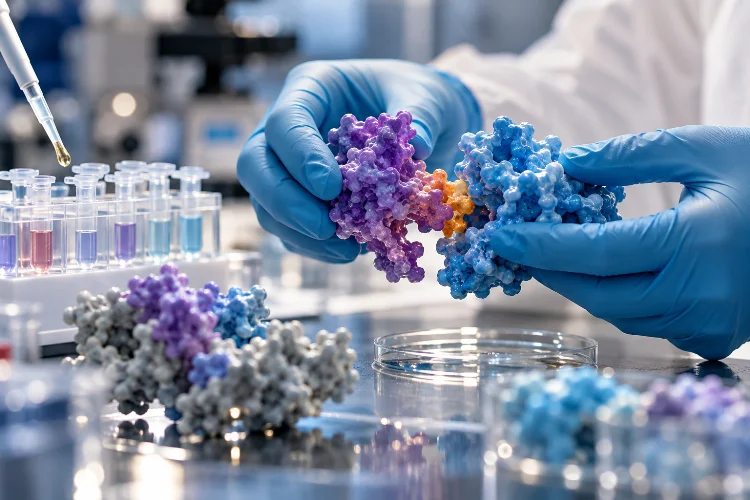
A protein rarely works completely alone. Inside a living cell, proteins constantly meet, bind, separate, compete, assemble into larger complexes, and change each other’s activity. These interactions can last for milliseconds or remain stable for […]

A living cell may look like a tiny bag of molecules, but inside it operates one of nature’s most sophisticated control systems. Thousands of genes, proteins, RNAs, membranes, enzymes, and chemical signals constantly interact to […]
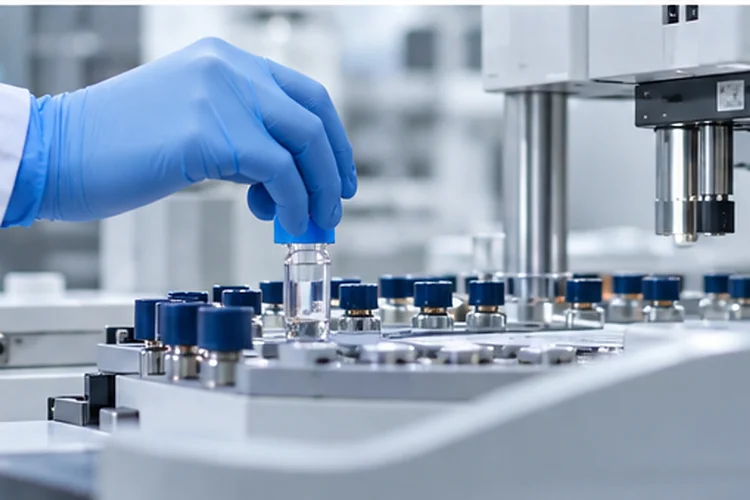
Modern laboratory experiments can become complicated very quickly. A simple assay may involve several reagents, multiple instruments, different technicians, dozens of samples, several processing days, and software pipelines that transform raw measurements into final results. […]

Imagine testing a new teaching method with four students. Three improve their scores, so the method appears highly effective. Now imagine repeating the same experiment with 2,000 students and finding that the average improvement is […]
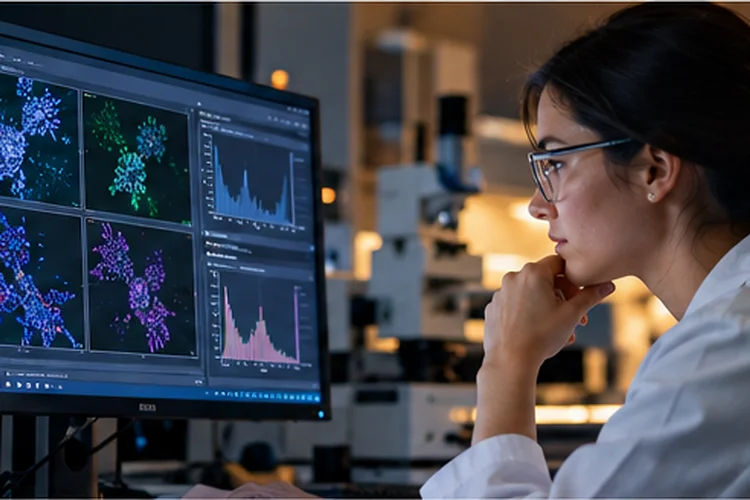
Scientific experiments rarely fail because researchers intentionally want the wrong answer. More often, problems appear through small decisions: choosing one sample instead of another, knowing which group received treatment, excluding an unusual result, or changing […]
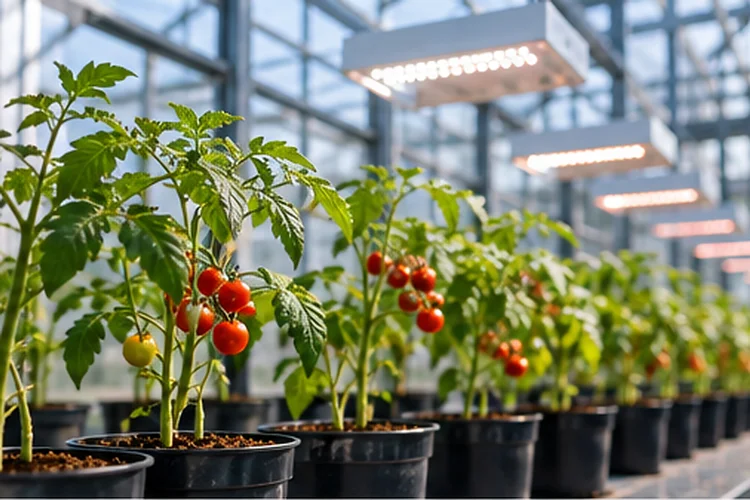
A scientific experiment can look simple from the outside: change one thing, measure what happens, and compare the results. In reality, dozens of other factors may be changing at the same time. Imagine testing whether […]

Scientific research can look convincing on paper while still resting on a surprisingly fragile experiment. A clean graph, a significant p-value, or a sophisticated statistical model cannot rescue a study whose design introduced bias before […]